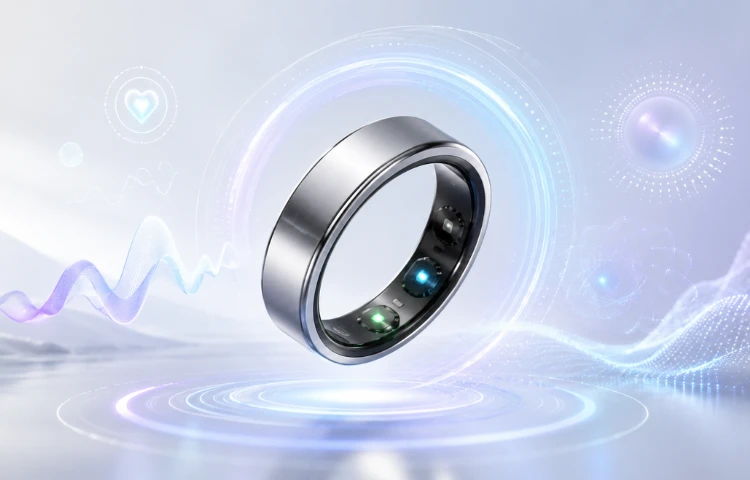
Wearable health tech is getting a serious glow-up. The latest wave of smart rings is proving that powerful wellness technology does not need to be bulky, loud, or strapped to your wrist. Instead, it can be small, lightweight, and smart enough to turn everyday health data into personalized guidance.
With AI health coaching entering the picture, smart rings are moving beyond basic step counts and sleep scores. They are becoming quiet digital companions that help users better understand recovery, stress, activity, and long-term wellness patterns. It is a major shift in personal health technology: less screen time, more useful insight, and a smarter way to stay connected to your body.
Why the smaller design matters
The biggest upgrade may seem cosmetic at first. But in wearable health tech, comfort is not a side quest; it is the whole game.
A health tracker only becomes useful when people actually wear it consistently. Smartwatches can be great during the day, but many people remove them at night, exactly when sleep, heart rate variability, recovery, temperature, and breathing data become most valuable. A thinner and lighter ring improves the odds that users will wear it around the clock without thinking about it.
That is why Oura’s “smaller and lighter” move is more than a design refresh. It is a data strategy. The more invisible the device feels, the more continuous the health picture becomes.
The Verge’s hands-on coverage also emphasizes that the Oura Ring 5 keeps the familiar ring look while becoming more comfortable, lighter, and smaller, weighing roughly 2 to 2.69 grams depending on size. It also highlights stronger LEDs, a redesigned charging case, and better activity-tracking support. [The Verge]
The real headline: Oura is becoming an AI health platform
The most important part of the Oura Ring 5 story is not just the titanium shell. It is the software layer around it.
Oura is positioning the Ring 5 as a gateway into more predictive, personalized health insights. Its new software experiences include Health Radar, GLP-1 Insights, lab data support, and AI-enabled medical guidance in partnership with Counsel Health. Oura says these features are part of a broader shift from daily tracking toward a more comprehensive view of long-term health patterns. [Oura Ring]
In other words, Oura does not just want to tell you how you slept last night. It wants to help you understand what your body may be signaling over time.
That is where the AI health coach comes in. Wired reports that Oura’s latest push includes Oura Advisor, an AI-driven assistant designed to give more personalized guidance based on biometric data, habits, and context. The goal is not simply to produce more charts, but to translate those charts into actions people can understand. [WIRED]
For users, this could mean asking questions like: “Why is my readiness score lower this week?” or “How should I adjust training after three nights of poor sleep?” Instead of manually interpreting multiple metrics, the AI coach can help connect dots across sleep, activity, stress, recovery, and heart signals.
Health Radar: early signals before obvious symptoms
One of the most interesting additions is Health Radar, which Oura says will begin rolling out in the United States in June 2026 for members using Oura Ring Gen3 and newer models. Members can opt out of the feature.
Health Radar is designed to surface early signals that may indicate changes in the body before users consciously feel different. This matters because many people do not notice subtle shifts in resting heart rate, temperature, respiratory patterns, or recovery until symptoms become disruptive.
The opportunity here is preventive wellness. The risk, of course, is over-interpretation. Wearables can provide useful signals, but they are not a replacement for clinical diagnosis. The best version of AI health coaching should be careful, contextual, and transparent about uncertainty.
That balance will determine whether AI-powered wearables become trusted wellness companions or just anxiety machines with nice app design.
GLP-1 Insights: wearables meet metabolic health
Oura is also moving into metabolic health with GLP-1 Insights, a feature expected to roll out starting in June 2026 for eligible Oura members in the United States, United Arab Emirates, and India. The feature is designed for people using GLP-1 medications and aims to help them understand changes in areas such as sleep, activity, readiness, and recovery.
This is a smart move because GLP-1 medications are reshaping conversations around weight management, metabolic health, and long-term behavior change. But medication is only one part of the story. Sleep quality, muscle maintenance, stress, nutrition, and activity habits all influence outcomes.
A wearable ring cannot replace medical care, but it can help users track lifestyle signals that may otherwise be hard to observe consistently.
Fitness tracking gets more practical
Oura has historically been known more for sleep and recovery than hardcore workout tracking. Ring 5 appears to close part of that gap.
Oura’s new Live Activity Tracking is aimed at giving users more real-time workout visibility, including support for tracking workouts as they happen. This makes the ring more competitive for people who want a lighter alternative to wrist-based devices but still care about movement data.
This does not mean Oura is suddenly trying to become a full sports watch. It is still a ring. There is no giant display, no rugged outdoor navigation interface, and no wrist-based training dashboard. But for everyday users who care about walking, running, gym sessions, recovery, and sleep, the Ring 5 is moving closer to becoming a complete wellness companion.
Privacy will matter more as AI health coaching grows
The more personal the insight, the more important privacy becomes.
AI health coaching depends on sensitive biometric data: sleep patterns, temperature trends, heart signals, reproductive health indicators, medication-related information, and potentially lab results. That is powerful. It is also deeply personal.
The Guardian reports that Oura has sold millions of rings globally and is expanding at a time when investor interest in smart rings and health data platforms is accelerating. It also notes that Oura Ring 5 starts at $399 and requires a subscription. [The Guardian]
As health wearables become more predictive, users should pay close attention to data controls, deletion options, third-party integrations, and how AI-generated guidance is created. Helpful health insights are exciting; clear user control is non-negotiable.
What Oura Ring 5 means for the future of AI wearables
The Oura Ring 5 shows where consumer health tech is heading: away from dashboards filled with raw metrics and toward AI systems that interpret those metrics in plain language.
That future has real value. Better sleep awareness, earlier health signals, smarter recovery guidance, and more personalized coaching could help people make small daily decisions that compound over time.
But the best AI health tools should do three things well: explain what they know, admit what they do not know, and encourage users to seek professional medical advice when needed. A ring can be a powerful signal collector. It should not pretend to be a doctor on your finger.
Conclusion
The rise of smaller, lighter AI-powered smart rings shows where wearable technology is heading next: less distraction, more personalization, and smarter health insights that fit naturally into daily life. Instead of simply collecting sleep, activity, and recovery data, the next generation of wearables is beginning to explain what that data actually means.
With AI health coaching, smart rings can help users better understand their bodies, spot wellness patterns, and make more informed lifestyle decisions. The future of digital health may not be louder, bigger, or more complicated. It may be quiet, lightweight, and sitting right on your finger.