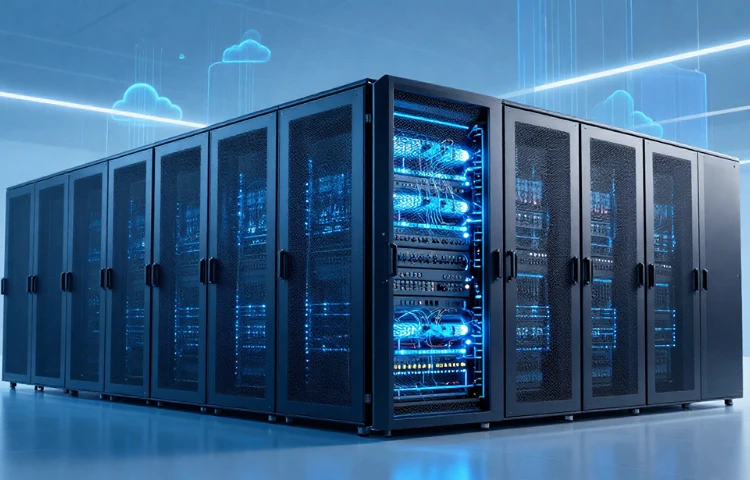
Meta to build C$13 billion Alberta data center is more than just another Big Tech expansion headline—it marks a significant shift in how the global AI race is unfolding. According to a Reuters report, Meta plans to construct its first Canadian data center in Sturgeon County, Alberta, with an investment exceeding C$13 billion (about US$9.17 billion). The facility is expected to deliver around 1 gigawatt of computing capacity and will become Meta’s 33rd data center worldwide. [Reuters]
What Meta Is Building in Alberta
The Alberta facility will be purpose-built for artificial intelligence workloads, supporting the massive computing demands behind generative AI, recommendation engines, advertising systems, and immersive digital experiences. Reuters reports that the project will create thousands of construction jobs during development and hundreds of permanent roles once operational.
This scale of infrastructure highlights a broader trend: AI competition is no longer just about software innovation. Companies are now racing to secure physical resources—power, land, cooling systems, and hardware—to sustain AI growth at scale. Data centers like this are becoming the backbone of the AI economy.
Why Alberta?
Alberta has emerged as an attractive destination for hyperscale data centers due to several key advantages. Reuters notes that the province offers relatively low-cost energy, a cooler climate that can help reduce cooling expenses, and a regulatory environment that supports large-scale industrial projects.
Perhaps most importantly, Alberta provides access to significant power capacity—something increasingly scarce in many regions. As AI systems demand more electricity, the ability to secure reliable, large-scale energy supply has become a decisive factor in site selection.
The Energy Question: Opportunity Meets Scrutiny
Energy is at the center of this project. Reuters reports that Meta will fund new power generation and grid infrastructure to support the data center. The facility’s energy consumption is expected to be substantial, comparable to that of hundreds of thousands of homes.
To meet this demand, the project is expected to rely in part on natural gas-fired power generation, raising questions about emissions and sustainability. While Meta has committed to matching its electricity use with renewable energy, critics argue that reliance on fossil fuels—even indirectly—could undermine climate goals.
This tension reflects a broader challenge facing the AI industry: balancing rapid infrastructure expansion with environmental responsibility.
Water Use and Cooling: A Critical Detail
Beyond electricity, data centers require efficient cooling systems to manage heat generated by high-performance computing. Meta has indicated that the Alberta facility will use advanced cooling technologies designed to minimize water consumption.
This is particularly important as data centers worldwide face increasing scrutiny over their environmental footprint, including both energy and water usage. Efficient cooling solutions will be essential to maintaining sustainability while scaling AI infrastructure.
Economic Impact for Canada
Meta’s investment represents a major milestone for Canada’s role in the global AI ecosystem. By hosting large-scale infrastructure, Canada moves beyond being just a consumer of AI technologies to becoming a key contributor to the systems that power them.
The project is also expected to stimulate local economic activity, attracting related industries such as construction, telecommunications, cybersecurity, and cloud services. For the workforce, it could create new opportunities in engineering, operations, and infrastructure management.
Why This Matters for the AI Industry
The Alberta data center underscores a critical shift in the AI landscape. Success is no longer determined solely by software capabilities but also by access to physical infrastructure—compute power, energy, and logistics.
AI is not an abstract, weightless technology. Every model, application, and service depends on tangible systems: servers, power grids, cooling networks, and skilled labor. As demand grows, these physical constraints will shape the future of AI development.
Final Thoughts
Meta’s C$13 billion investment in Alberta is a defining moment for both Canada and the global AI industry. It highlights the growing importance of infrastructure in the AI race while raising important questions about sustainability and resource management.
The key takeaway is clear: the future of AI will be built not only through code and algorithms but also through the physical systems that support them. Regions that can provide the right mix of energy, infrastructure, and policy support will play a central role in shaping that future.