OpenAI has once again placed artificial intelligence at the center of a major scientific conversation, this time with a reported breakthrough on an 80-year-old mathematics problem linked to legendary mathematician Paul Erdős. The development highlights how advanced AI reasoning models are beginning to move beyond simple automation and content generation into the world of original research, complex problem-solving, and scientific discovery.
For decades, this problem in discrete geometry challenged mathematicians and remained a symbol of how difficult certain abstract questions can be, even when they appear simple on the surface. OpenAI’s progress suggests that AI may now be capable of uncovering patterns, testing possibilities, and generating insights that expand the limits of human research.
This breakthrough is important not only for mathematics but also for the future of enterprise technology, scientific innovation, and responsible AI adoption. As AI systems become more capable, organizations must understand both the opportunities and the responsibilities that come with them. This article explores what OpenAI achieved, why the breakthrough matters, and how it could shape the next chapter of AI-assisted discovery.
The breakthrough: AI takes on a legendary Erdős problem
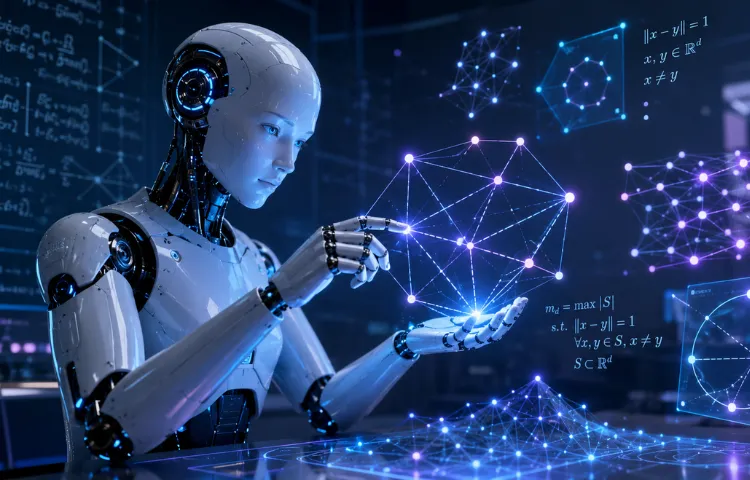
OpenAI has announced a major mathematical milestone: one of its internal general-purpose reasoning models disproved a long-standing conjecture in discrete geometry connected to the planar unit distance problem, first posed by Hungarian mathematician Paul Erdős in 1946. In simple terms, the problem asks: if you place n points on a flat plane, how many pairs of points can be exactly one unit apart? OpenAI describes the question as one of the best-known problems in combinatorial geometry, and its model found a new infinite family of arrangements that performs better than the square-grid-style constructions mathematicians long believed were close to optimal.
That is a big deal because this was not just a calculator doing arithmetic at superhero speed. According to OpenAI, the model generated a proof that has been checked by external mathematicians, showing that AI systems are beginning to contribute original reasoning to advanced research fields rather than merely summarizing existing work. TechCrunch notes that this announcement matters especially because OpenAI had faced criticism over earlier claims involving Erdős problems, where the results turned out to already exist in the literature. This time, OpenAI published supporting materials and companion remarks from mathematicians, giving the claim far more credibility. [TechCrunch]
What exactly did OpenAI solve?
Careful wording matters here. OpenAI did not fully solve the entire unit distance problem. The broader question of the exact growth rate remains open. What the model did was disprove a central conjecture about what the best point arrangements should look like. For nearly 80 years, many mathematicians expected square grids to be essentially optimal. OpenAI’s model found constructions that improve on that belief, which means the mathematical map has changed. The Guardian reported that the model discovered a family of arrangements that broke the previously expected limit, while also emphasizing that the full problem is still unresolved. [The Guardian]
Think of it this way: the AI did not finish the entire crossword puzzle, but it filled in a clue everyone thought was impossible—and revealed that several assumed answers were wrong. For researchers, that is not a footnote. That is a new doorway.
Why this matters beyond mathematics
The most exciting part is not just the geometry. It is what this says about AI reasoning models. OpenAI says the result came from a general-purpose reasoning model, not a tool designed only for this one mathematical challenge. That suggests advanced AI systems may increasingly help researchers explore problems across biology, physics, materials science, engineering, and medicine. Scientific American framed the result as one of AI’s biggest mathematics breakthroughs so far, highlighting the growing excitement among mathematicians about AI-generated proofs. [Scientific American]
The human role is still essential
This is not a “pack up the chalkboards, mathematicians” moment. It is more like “the chalkboard just got a rocket engine.” The Guardian reported that mathematician Thomas Bloom said humans still played a vital role in discussing, digesting, improving, and exploring the proof’s consequences. That distinction is important: AI may generate surprising paths, but human experts remain essential for validation, interpretation, communication, and deciding what the result means.
Why governance, ethics, and regulation belong in this conversation
A breakthrough in pure mathematics may sound far removed from AI regulation, but it is actually a perfect example of why governance must evolve. As AI systems become capable of producing original research, institutions will need better standards for attribution, reproducibility, peer review, safety testing, and responsible deployment. This is not about slowing innovation. It is about making sure high-impact discoveries can be trusted.
Conclusion
OpenAI’s breakthrough on an 80-year-old mathematics problem marks an important step forward in the evolution of AI-assisted research. While the full mathematical challenge remains open, the progress made by OpenAI’s reasoning model shows that artificial intelligence is becoming increasingly capable of contributing to complex, high-level problem-solving in meaningful ways.
For mathematicians, researchers, and technology leaders, this development is more than a technical achievement. It signals a future where AI can help explore new ideas, challenge long-standing assumptions, and accelerate discovery across multiple fields. From scientific research to enterprise innovation, the potential impact is significant.
At the same time, this breakthrough also reinforces the need for responsible AI development. As AI systems become more powerful, human expertise, verification, transparency, and ethical governance will remain essential. The future of innovation will not depend on AI replacing human intelligence, but on humans and AI working together to solve problems that once seemed out of reach.