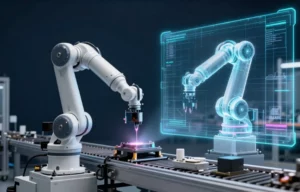
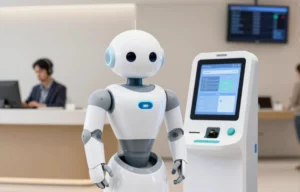
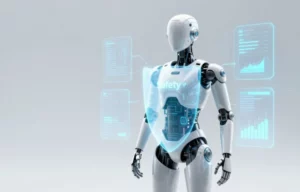
Voyager Technologies and Icarus Robotics are taking embodied AI where it gets brutally real: orbit. Their upcoming International Space Station demo will test Joyride, a free flying robot on space station duty, built to navigate microgravity, operate safely around astronauts, and generate the kind of real-world data that simulations simply cannot replicate. This is more than a flashy ISS gadget story. It is a preview of how autonomous robots will power the next era of commercial space stations, where every crew minute matters and routine logistics must scale without adding risk.
The big picture: embodied AI goes orbital
The highest performing AI systems in the next decade will not only write and summarize. They will move, touch, inspect, repair, and maintain. That is why Joyride matters. According to Reuters, the ISS demo is also meant to gather data needed to train AI models for operating robots in space, because no simulator fully replicates microgravity, station airflow, lighting, edge cases, and the messy unpredictability of real operations. [Reuters]
This is the same “sim to real” problem we see in factories, warehouses, and hospitals, just with a slightly higher cost of failure.
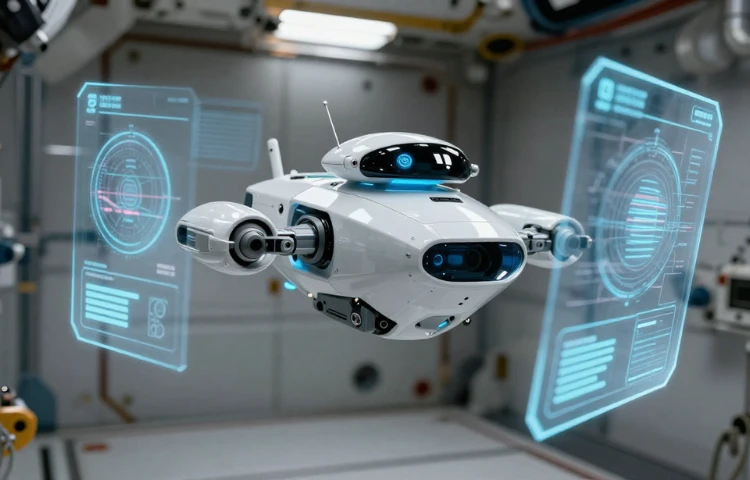
What Joyride is and what it is built to do
Icarus’ platform is designed to move inside pressurized crewed stations. Payload Space reports the robot uses fans for propulsion and includes two manipulator arms, aiming to help with cargo and logistics tasks while collecting operational data alongside astronauts. [Payload]
Voyager’s announcement adds the near term focus: autonomous navigation, maneuverability, and operational performance in a live station environment, targeted for early 2027.
That combination is the real headline. Free flying robots already exist on ISS, but adding more capable manipulation plus learning loops pushes the platform from “floating camera assistant” toward “general purpose robotic coworker.”
This fits NASA’s post ISS strategy
NASA has publicly committed to using and operating the ISS through 2030 while transitioning to commercially owned and operated platforms in low Earth orbit. The agency is also actively building a broader low Earth orbit economy and commercial station ecosystem.
Robots like Joyride are a natural match for that transition. Commercial stations will need to do more work with fewer crew hours, tighter budgets, and more private payload throughput. Automation is not a nice to have, it is the business model.
The ISS already has free flyers, and that is the point
NASA’s Astrobee system, for example, is a set of free flying robots that have operated aboard the ISS for years, supporting monitoring and research. NASA has even explored new partnership models around operating and using Astrobee as it pushes commercialization in low Earth orbit.
Joyride is entering a real world proving ground with precedent, procedures, and hard earned lessons. That is good news for safety, and it is great news for data quality.
Safety and governance are not footnotes in space robotics
A robot flying near humans in a closed spacecraft is a safety story first and an AI story second. Voyager explicitly highlights safety certification as part of the work scope. NASA’s ISS payload safety process is structured around demonstrating compliance, independent review, and documented hazard controls.
On the AI side, this is where “responsible autonomy” stops being a slogan. In practice, it looks like:
- clear human override modes and safe states
- auditable logs of perception and control decisions
- constraints on what the robot can do near crew
- continuous monitoring, not just pre flight testing
If you want the enterprise version of that mindset, Quantilus has been tracking how governance platforms and accountability workflows are becoming market requirements, not optional checkboxes.
A useful template for organizations building or buying autonomy is the NIST AI Risk Management Framework, which emphasizes governance and lifecycle risk management rather than one time approvals. Space is simply the loudest possible reminder that lifecycle discipline wins.
Why this matters beyond the ISS
Reuters notes future use cases like satellite inspection and repair, station logistics, and even managing orbital infrastructure. That is not science fiction marketing. It is the logical path once you have three ingredients:
- flight proven mobility and manipulation
- reliable autonomy under constraints
- mission operations pipelines that scale
Conclusion
Voyager and Icarus Robotics are not just sending a gadget to orbit—they’re running a real-world stress test for autonomous, free-flying robotics in human-rated environments. By proving that Joyride can navigate safely, maneuver reliably, and perform useful tasks in the chaos of microgravity, this ISS demo helps unlock a future where robots handle routine station work, reduce crew workload, and collect the operational data needed to train smarter, more capable systems.
The ripple effects go well beyond the space station. The same lessons—safe autonomy, tight constraints, transparent monitoring, and rigorous certification—are exactly what industries on Earth need as physical AI moves from pilot projects into mission-critical operations. If Joyride performs as planned, it won’t just validate a robot—it will validate a workflow for deploying responsible autonomy in high-stakes environments, one controlled flight at a time.