


Prefer to listen instead? Here’s the podcast version of this article.
Artificial intelligence is no longer just answering questions about biology—it is increasingly helping scientists explore its unanswered mysteries. From predicting protein structures to supporting pharmaceutical research, generative AI is entering a scientific territory previously dominated by highly specialized computational models.
Google DeepMind’s AlphaFold has long been recognized as one of the most significant breakthroughs in AI-powered biological research. However, OpenAI’s ChatGPT and Anthropic’s Claude are demonstrating increasingly sophisticated biological capabilities that could reshape the future of scientific discovery.
According to a [Nature] researchers are discovering that large language models (LLMs) can perform protein-related tasks previously associated with specialized biological AI systems, including protein design and sequence and structure prediction.
Before understanding why Claude and ChatGPT are generating excitement, it is important to recognize what made AlphaFold revolutionary.
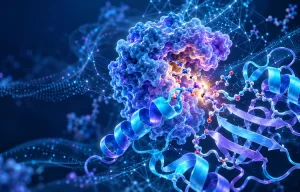
Proteins are essential molecular building blocks responsible for numerous biological functions. Understanding their three-dimensional structures helps scientists investigate diseases, develop treatments, and understand how living organisms function.
Traditionally, determining protein structures could require substantial laboratory resources, specialized equipment, and months or years of research.
AlphaFold transformed this process by using artificial intelligence to predict protein structures with remarkable accuracy.
According to [Google DeepMind] AlphaFold has helped transform structural biology, while AlphaFold 3 has expanded predictive capabilities to interactions involving proteins, DNA, RNA, and small molecules relevant to pharmaceutical development.
However, specialized AI systems are designed primarily around particular scientific problems. General-purpose AI models introduce a different opportunity: connecting multiple research activities within a single conversational interface.
Rather than replacing AlphaFold, Claude and ChatGPT could help researchers make better use of specialized scientific technologies.
Anthropic’s Claude is increasingly demonstrating that large language models can contribute to scientific research beyond summarizing academic papers.
Its capabilities include interpreting complex biological information, evaluating scientific evidence, analyzing research data, assisting with computational workflows, and helping researchers develop hypotheses.
In its research article [Anthropic] Anthropic describes how its models tackle open-ended bioinformatics problems using real-world biological datasets.
The company reports that newer Claude models demonstrated performance comparable to human experts on this particular benchmark and solved some problems that participating experts could not.
While these findings do not establish that Claude is superior to scientists across biology, they highlight an important shift in how AI could support research.
Instead of requiring researchers to manually coordinate every computational task, AI assistants could help organize information, identify meaningful patterns, evaluate alternative explanations, and reduce repetitive analytical work.
For biotechnology companies, this could translate into faster research cycles, more efficient resource allocation, and greater opportunities to explore previously overlooked research questions.
OpenAI is also expanding the capabilities of AI in biological research, with growing emphasis on scientific reasoning and practical research workflows.
In [Introducing LifeSciBench] OpenAI presents a benchmark containing 750 expert-developed tasks across seven biological domains and seven research workflow categories.
Unlike conventional assessments that primarily measure factual knowledge, LifeSciBench evaluates whether AI systems can contribute to realistic scientific activities, including evidence interpretation, research analysis, scientific reasoning, and communication.
This distinction is particularly important for pharmaceutical companies and healthcare organizations. Scientific innovation requires more than retrieving information—it demands critical thinking, contextual understanding, and the ability to recognize uncertainty.
ChatGPT could increasingly support researchers by helping them synthesize scientific literature, interpret experimental findings, organize research documentation, and identify promising directions for further investigation.
Despite their impressive progress, general-purpose AI models are unlikely to make specialized biological systems obsolete in the immediate future.
AlphaFold, Claude, and ChatGPT offer fundamentally different strengths. AlphaFold provides dedicated molecular structure predictions, while large language models offer broader reasoning, communication, and research workflow assistance.
The greater opportunity lies in combining these capabilities.
Anthropic’s research article [How Claude Is Uplifting Biomolecular Modeling] reports that an internal general-purpose research model helped optimize more than 30 open-source biological models, improving their processing speeds approximately fourfold on average.
The findings suggest that general-purpose AI could improve the performance and accessibility of existing scientific tools rather than simply compete against them.
Imagine a research environment where scientists use conversational AI to review existing literature, coordinate specialized computational tools, interpret their results, and prepare findings for expert review.
Such an integrated ecosystem could make biological research more efficient while preserving the accuracy and reliability offered by domain-specific technologies.
The pharmaceutical industry could become one of the biggest beneficiaries of these advancements.
Drug discovery involves numerous complex stages, from identifying potential therapeutic targets to conducting laboratory experiments and clinical trials. Artificial intelligence could help reduce computational and administrative bottlenecks throughout this process.
Potential applications of generative AI in biotechnology include:
However, faster computational research does not automatically translate into faster regulatory approval or successful clinical outcomes. Laboratory validation, clinical trials, and expert oversight remain essential.
As artificial intelligence becomes increasingly involved in biological discovery, responsible implementation must remain a priority.
AI-generated scientific conclusions are not automatically accurate. Models can produce misleading interpretations, overlook important biological context, and generate conclusions that appear convincing without sufficient supporting evidence.
Healthcare and biotechnology organizations must therefore establish robust governance frameworks that prioritize scientific validation, data privacy, transparency, regulatory compliance, and human accountability.
Organizations should also ensure that AI-assisted research remains reproducible and that scientific decisions can be independently reviewed.
The most successful AI implementations will likely be those that combine technological innovation with established scientific standards rather than sacrificing reliability for speed.
As AI becomes embedded in enterprise research workflows, investing in secure infrastructure, responsible data management, and effective human oversight will be just as important as adopting powerful models.
The emergence of Claude and ChatGPT as increasingly capable scientific assistants represents a significant evolution in artificial intelligence.
We are moving beyond AI systems that simply retrieve information toward intelligent platforms capable of supporting multiple stages of scientific research.
Universities, biotechnology startups, pharmaceutical companies, and healthcare organizations could benefit from more accessible computational tools, streamlined research workflows, and stronger collaboration between scientific disciplines.
The competitive landscape may ultimately shift from individual AI models toward interconnected scientific ecosystems, where general-purpose AI, specialized models, research databases, and human expertise work together.
Claude and ChatGPT’s expanding biological capabilities signal an exciting new chapter in AI-powered scientific discovery.
While AlphaFold remains a groundbreaking technology for molecular structure prediction, large language models are demonstrating how flexible reasoning and research assistance could complement specialized scientific systems.
For pharmaceutical companies, healthcare organizations, and technology leaders, the opportunity extends beyond adopting another AI tool. It involves reimagining how scientific research is conducted, how discoveries are validated, and how innovation can be accelerated responsibly.
The future of AI in biology may not be about which model wins the competition. Instead, it may be about how effectively these technologies work together to solve some of humanity’s most complex scientific challenges.







WEBINAR
