Alibaba’s latest move signals a clear shift in enterprise AI: from tools that answer questions to systems that execute work. With the launch of Wukong, Alibaba is positioning itself at the center of China’s rapidly accelerating AI agent wave, offering businesses a platform designed to coordinate multiple AI agents across everyday workflows like document creation, spreadsheet updates, research, and meeting transcription. As organizations across China race to operationalize agent-based automation, Wukong arrives at a moment when productivity gains are within reach, but so are new expectations around governance, security, and responsible deployment. This article explains what Alibaba launched, why AI agents are taking off so quickly in China, and what enterprise leaders should consider before bringing agentic AI into core business operations.
What Alibaba launched and why Wukong is different
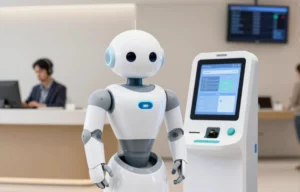
Alibaba describes Wukong as an enterprise platform that can coordinate multiple agents inside a single interface, targeting tasks like document editing, spreadsheet updates, meeting transcription, and research. It is currently invitation only beta, available as a desktop app and also embedded inside DingTalk, Alibaba’s workplace collaboration product. [Reuters]
The key difference versus a standard assistant is orchestration. Instead of you prompting five tools and stitching results together, Wukong is designed to delegate work across multiple agents and steps, then return a finished output. That is the agent promise: less typing, more shipping.
Why the AI agent craze is sweeping China right now
A big catalyst has been the viral adoption of OpenClaw, an open source agent framework that sparked what some outlets call a gold rush among major Chinese tech firms. [Business Insider]
China is uniquely positioned for agentic AI because so many workflows already live inside tightly connected ecosystems, messaging, payments, logistics, commerce, and work apps. When your digital world is already integrated, agents can move faster from “helpful” to “hands on.” [Financial Times]
Alibaba’s move also fits a broader strategy shift: consolidating AI efforts and pushing them into enterprise monetization pathways, rather than treating AI as a side feature.
What Wukong could change inside enterprise workflows
Here are the near term use cases where platforms like the Alibaba Wukong AI platform for enterprises tend to land first:
Operations and shared services
Agents that draft updates, reconcile inputs across systems, and produce standardized reports can shrink cycle time on recurring work.
Finance and compliance support
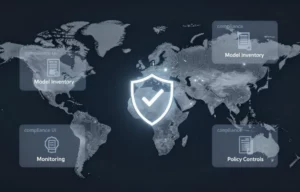
Meeting transcription plus policy aware summarization plus spreadsheet updates is a very real combo, but only if access controls and audit logs are rock solid.
The part nobody gets to skip: security, governance, and regulation
Agents need broader permissions than chatbots. That is the feature and the risk.
Chinese regulators have publicly warned about security issues tied to rapid, misconfigured deployments of OpenClaw, urging stronger audits, identity verification, and access controls.
That warning is not just a China story. It is the universal agent problem: the more an AI system can do, the more damage it can do when it is wrong, compromised, or over permissioned.
A practical adoption checklist for enterprise AI agents
Use this as a quick reality filter before you roll anything out:
- Start with low risk workflows like internal knowledge search, meeting notes, and draft generation
- Enforce least privilege access so agents only touch what they must
- Require audit logs for every action, tool call, and data source used
- Define human approval gates for anything that changes records, triggers communications, or commits spend
- Run red team testing focused on prompt injection, data leakage, and unsafe tool usage
- Align to your regulatory environment and track emerging guidance, including how governments are thinking about safe deployment standards
Conclusion
Alibaba’s launch of Wukong is a strong signal that AI agents are moving from hype to practical enterprise deployment, especially in China’s fast-moving digital ecosystem. Platforms that can coordinate multiple agents across documents, spreadsheets, meetings, and research have the potential to compress workflows, reduce repetitive effort, and improve decision speed across teams. But the same capabilities that make agents powerful also raise the bar for responsible adoption: access control, auditability, data protection, and clear human oversight are no longer optional.